Nespresso AAA Farm
A 12-minute standalone retail experience taking customers onto a Colombian coffee farm to experience Nespresso's AAA sustainability standards firsthand.
Role
Technical Product Owner (UX Lead)
Target Hardware
Oculus Quest
Industries
Sustainable Agriculture / Coffee Farming
Date
Jul 2020 - Jan 2021
Problem
Building on an earlier, and very brief, Phase 1 proof of concept, Nespresso wanted to expand this into an engaging 12-minute in-store VR experience, for shoppers to learn about its AAA sustainable farming practices.
Expanding that concept into a 12-minute experience introduced clear technical and usability constraints. The application had to run standalone on Oculus Quest hardware, operate comfortably in both seated and room-scale store setups, and support English, French, and German localisation. Because most boutique staff and shoppers would be using VR for the first time, the interactions needed to feel immediately intuitive.
My Role
Working across concept artists, 3D environment artists, developers, audio engineers, and localisation teams, I owned the UX architecture and interaction design of the experience from initial concept sketches through to final release.
I mapped the 10-scene narrative flow, prototyped spatial UI layouts in ShapesXR, and defined all interaction mechanics, including gaze, pickup, and haptic elements. I authored the master design specification that aligned art, audio, and engineering around shared scene blueprints, spawn logic, and voiceover triggers. Throughout production, I led structured VR playtest reviews to triage sequence bugs, animation timing issues, and mobile performance trade-offs, ensuring the build hit its fidelity targets without overwhelming first-time headset users.
Process
Discovery began with reviewing feedback from the Phase 1 proof of concept and early feature proposals alongside the physical realities of retail deployment. Because store environments required both seated and room-scale support for novice users, we made an early scoping decision to avoid beta hand tracking in favour of reliable controller-based point-and-select, reach, and gaze interactions, paired with automatic height scaling so interactive props remained comfortable for every user.
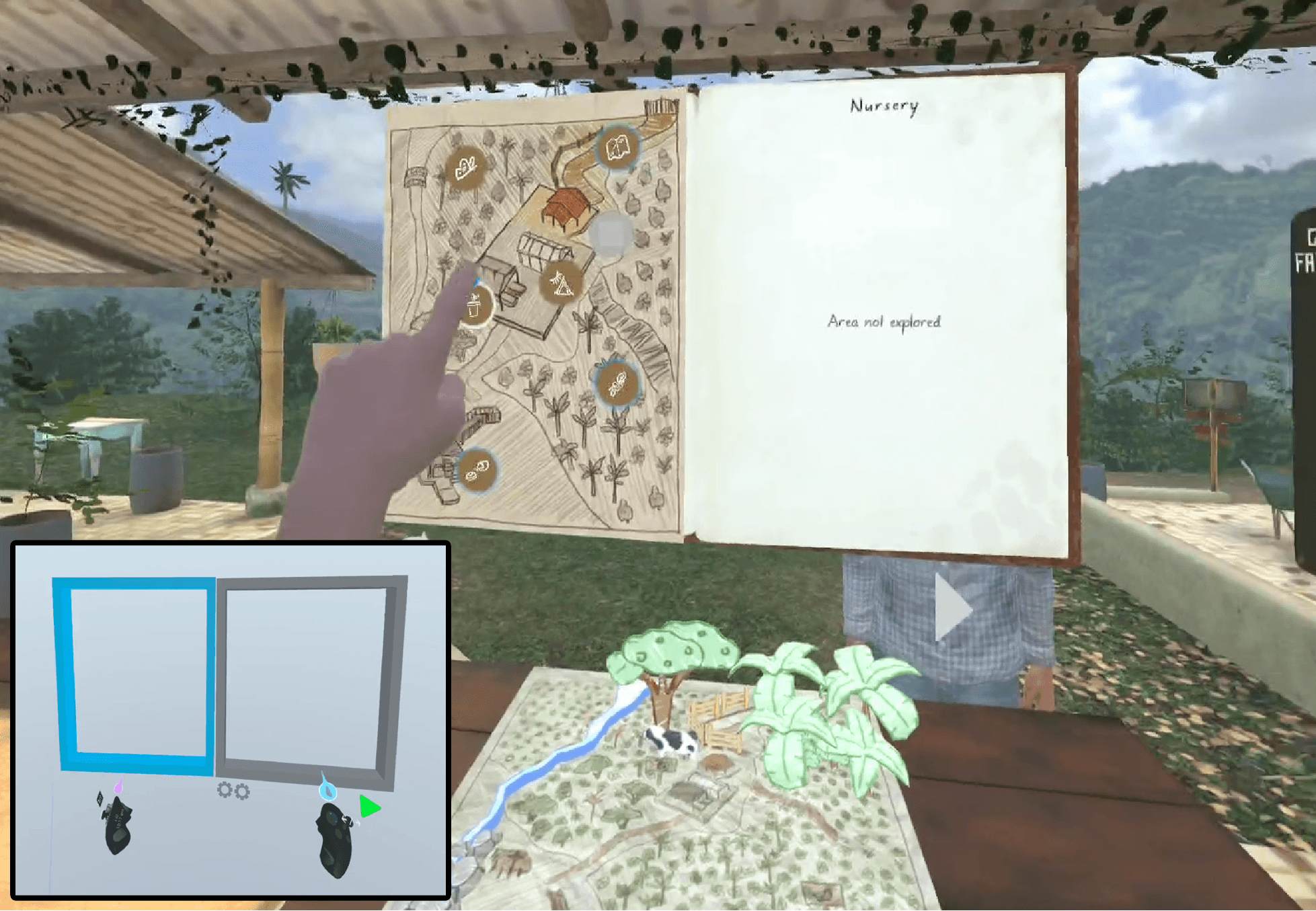
Before committing engineering time, I sketched some early concepts and layouts, as well as rapidly prototyping some aspects in ShapesXR to test viewport comfort zones, reach distances, and text legibility for key moments. Testing the interactive farm map and educational panels directly in headset revealed that flat layouts pushed text toward the outer edges of the field of view and caused eye strain. To solve this, I redesigned the interface into angled, 24-30 cm book-style panels positioned within natural reach, pairing progressive text reveals with spatial audio cues to guide the user's gaze without forcing awkward head turns.
To prevent users from feeling disoriented between scenes, I structured the Colombian farm as a single persistent environment rather than disconnected teleport rooms. Shared terrain, lighting, and open sightlines allowed users to look back and see zones they had already visited, such as spotting the nursery path from inside the drying tent. I also ordered the narrative progression to support this and so that it made sense in the narrative.
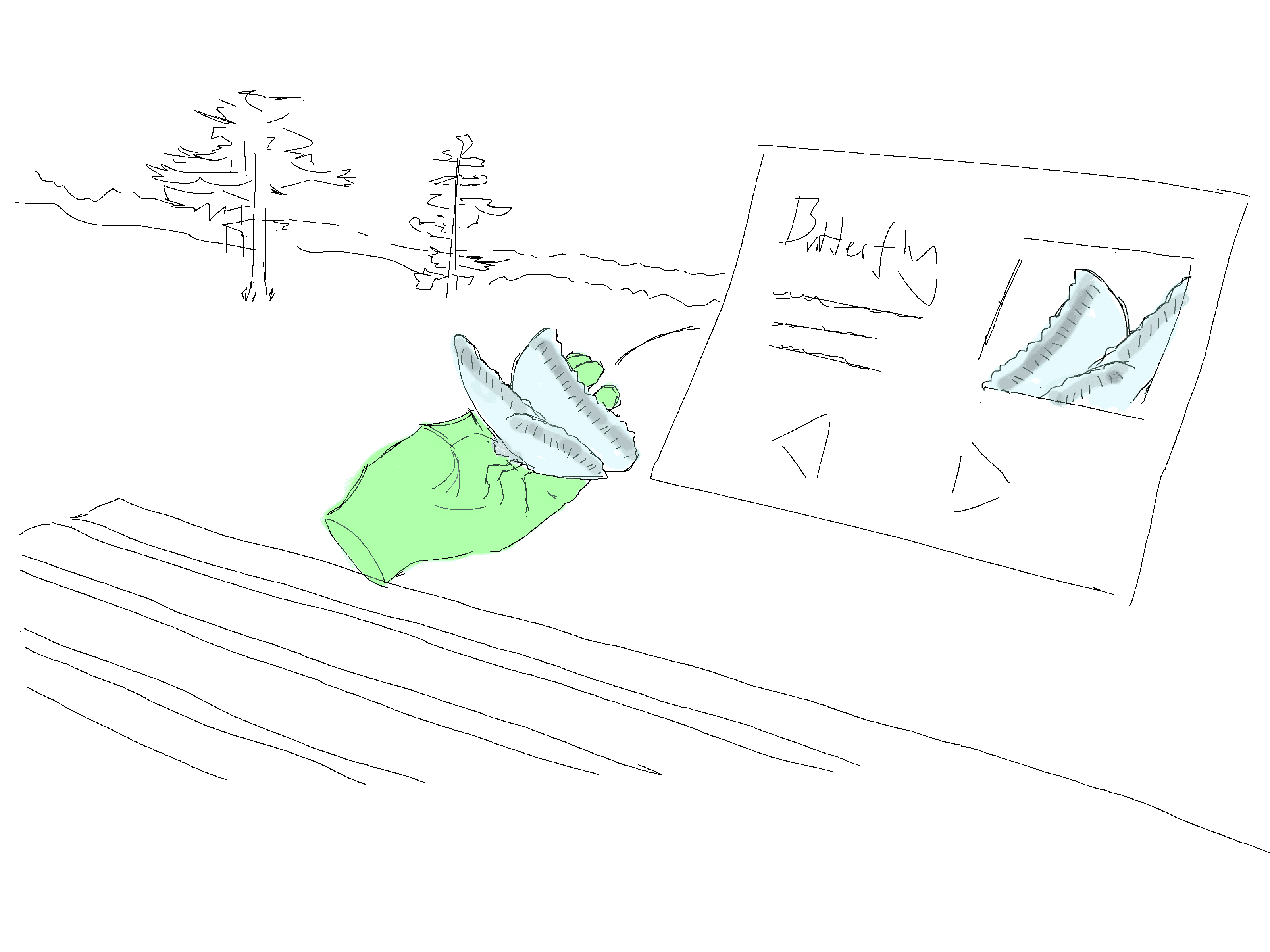
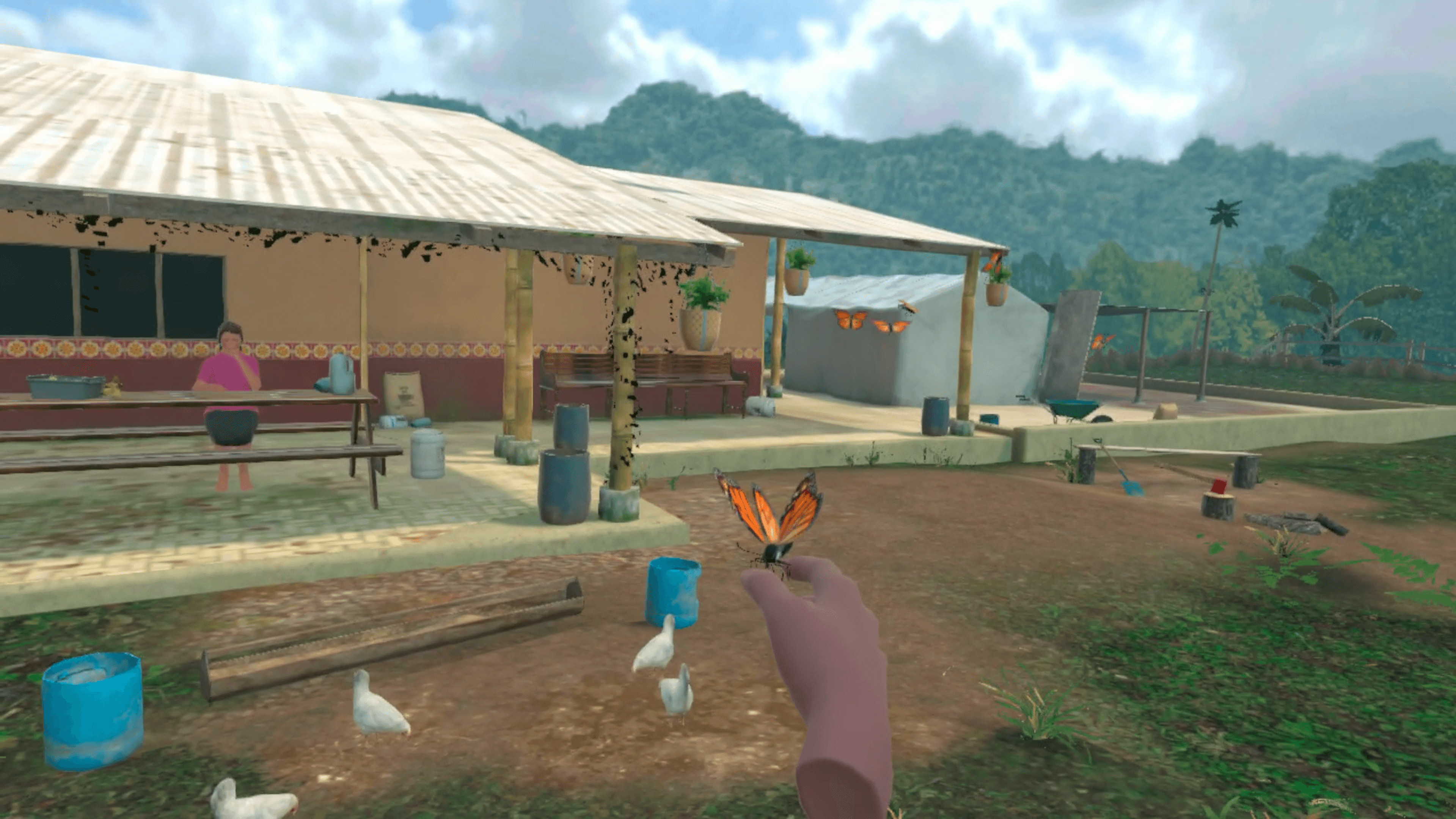
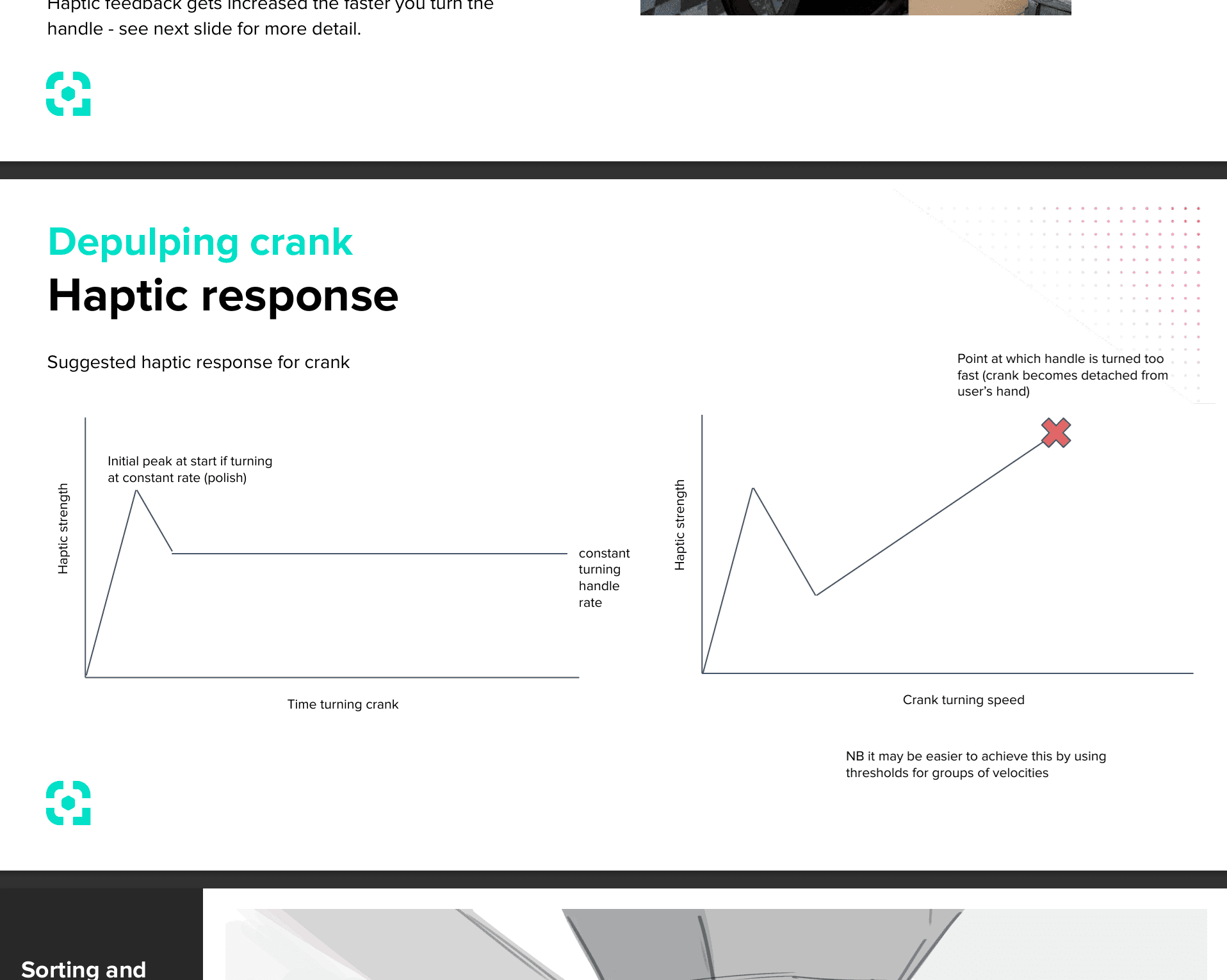
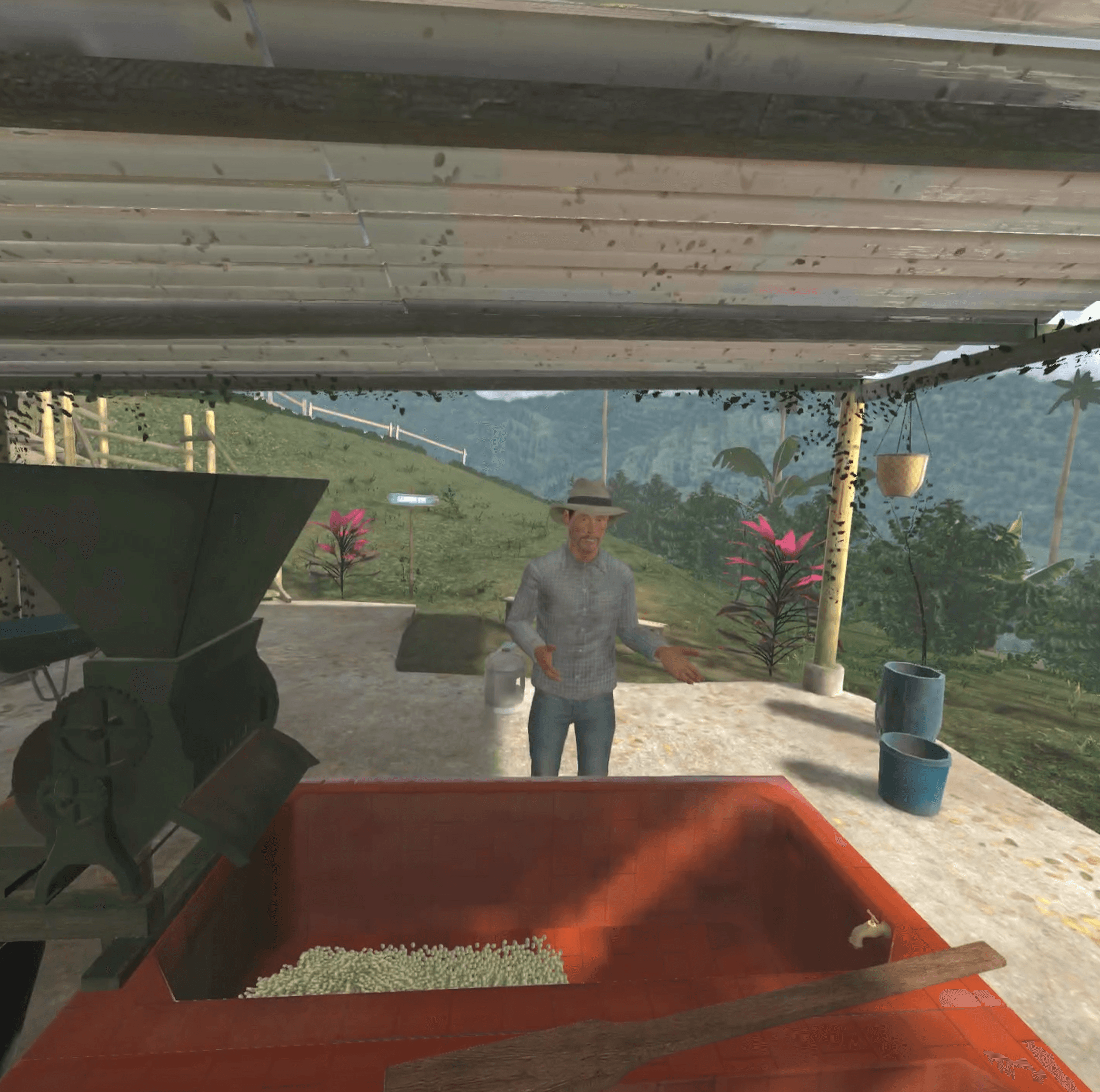
Every hands-on interaction was designed around clear physical feedback and automatic error recovery so first-time users could never hit a dead-end. If a user dropped the watering can or plant pots in the nursery, the props automatically respawned in their starting positions. At the depulping station, turning the crank triggered velocity-sensitive haptic pulses synced with voiceover as cherries separated into pulp and beans. In the biodiversity zone, gazing at specific trees or raising a hand to attract a butterfly toggled environmental audio and visual layers comparing AAA agroforestry with degraded land, while a 'magic window' frame dissolved between the old unsafe farmhouse and the rebuilt structure when looked through.
I tied the master design document directly to a scene-by-scene voiceover spreadsheet, and ran narrated in-headset reviews.
Solution
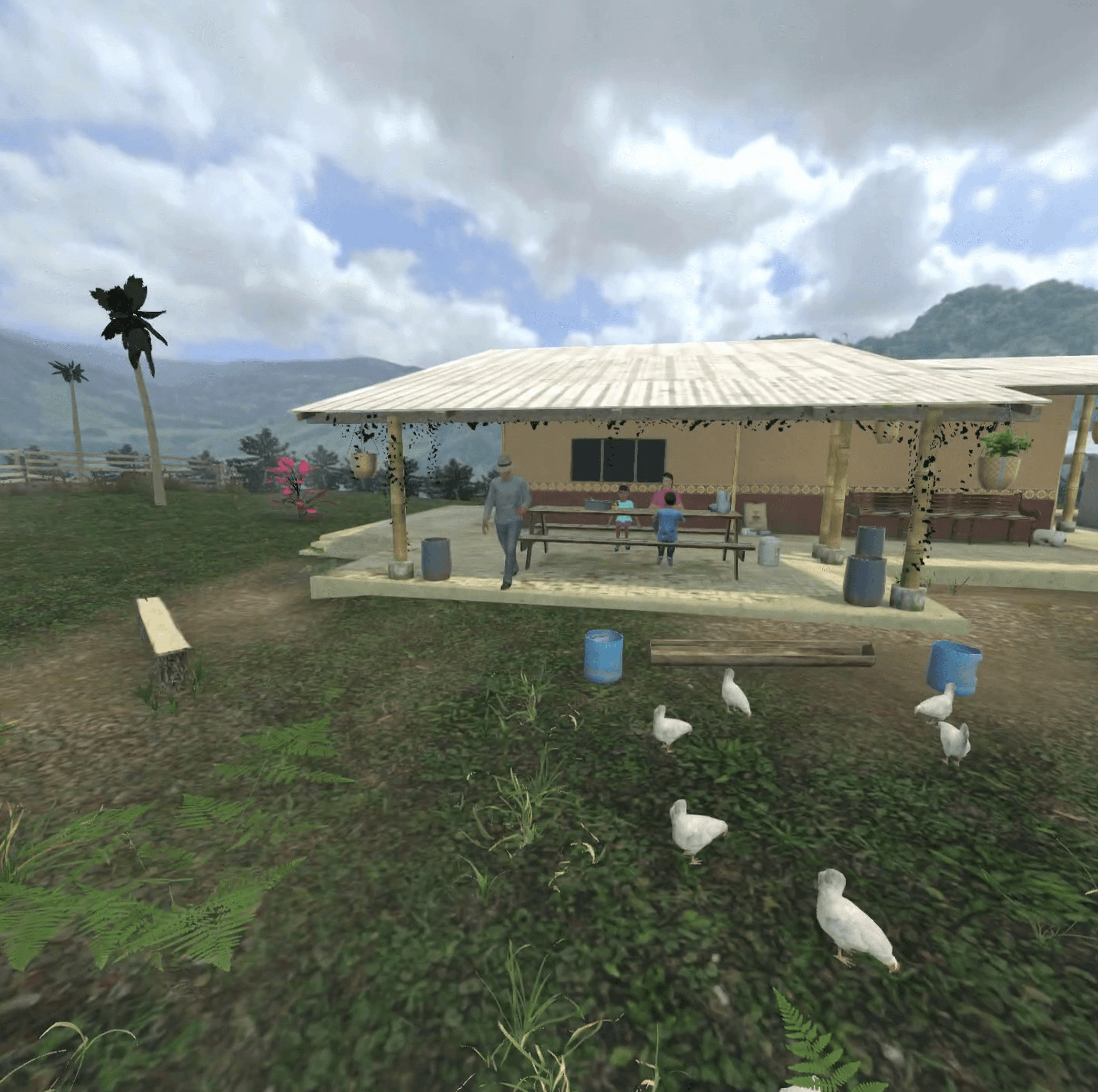
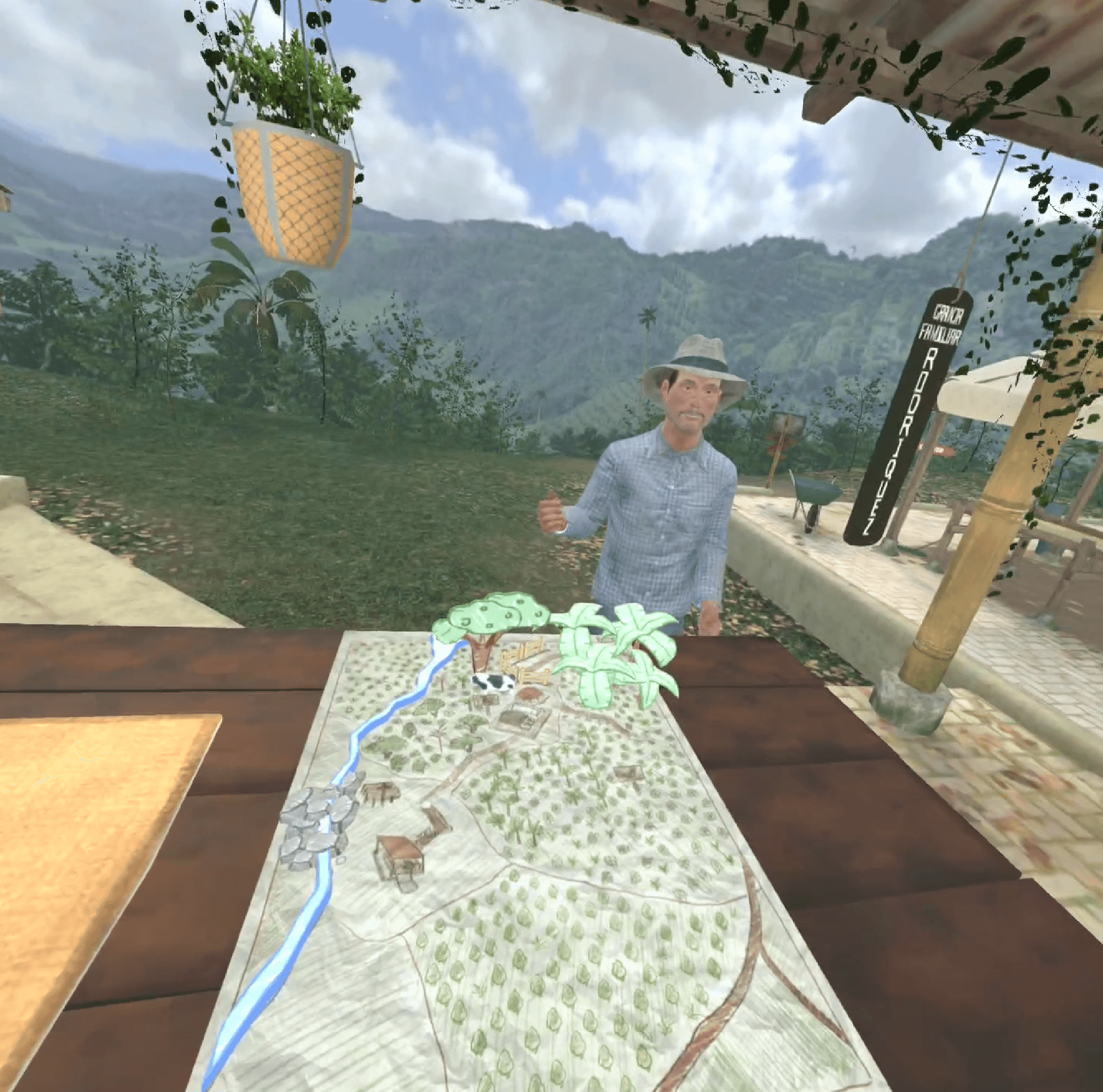
We delivered a 12-minute interactive VR journey spanning more than 10 connected scenes across the Rodriguez family coffee farm in Colombia. Guided by Carlos and an agronomist, retail staff and store visitors progress through the lobby introduction, farmhouse veranda, interactive farm map, biodiversity zone, nursery, cherry-picking orchard, wet-processing depulping station, drying tent, and accounting area.
Key features of the finished experience included:
Persistent Spatial World
Continuous terrain, lighting, and sightlines allowed users to see where they had already travelled across the farm, supported by automatic height scaling and seated or room-scale compatibility.Diegetic, Low-Clutter Interface
Angled reach-distance map panels, ghosted-hand prompts, gaze triggers, and object highlights replaced floating menus so first-time users could focus on the environment.Hands-On Sustainability Mechanics
Users watered and inspected saplings at three growth stages with auto-respawn safeguards, turned a haptic-driven crank to depulp coffee cherries, scanned agroforestry trees, and looked through a 'magic window' frame to compare the farm before and after AAA improvements.Multilingual Audio and Expressive NPCs
Ethnically authentic voice acting across all three target languages was synchronised with spatial soundscapes and timed character gestures.Optional Grounding Moments
Playful, low-pressure interactions - including attracting a butterfly, throwing a stick for the farm dog, and sharing a coffee toast on the veranda - reinforced emotional presence without blocking core progression.
Outcome
The final build was deployed via the Immerse Platform and rolled out across English, French, and German markets for Nespresso retail stores and staff training.
Deployed a complete, localised 10-scene training experience with integrated scene-entry analytics tracking.
Achieved smooth standalone performance and interaction fidelity targets within strict mobile GPU and memory limits.
Passed all functional and animation QA gates with zero dead-end interaction states for first-time VR users.
Reflection
Prototyping spatial layouts in ShapesXR before writing production code settled critical questions around panel angles, reach distance, and field-of-view comfort early, avoiding expensive UI rework later in development. Similarly, treating physical edge cases - such as dropped watering cans or stray prop physics - as core interaction design rather than minor QA bugs proved essential when designing for retail users who had never worn a headset.
Coordinating animation, localised voiceover, and interaction triggers across distributed teams also reinforced the value of a single source of truth. Pairing a state-driven design specification with narrated in-headset build reviews proved useful for preventing technical debt. More broadly, pairing tactile farming tasks with quiet, human moments like a coffee toast on the veranda demonstrated how grounded environmental storytelling can make sustainability standards immediately tangible.